Letter revoking a VAT option to tax
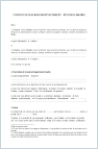
If you exercise the option to tax a commercial property for VAT purposes it is irrevocable except in a few situations. If you do want to revoke the option, use our letter to help ensure that you send the correct documents and information to HMRC so that it is effective.
About the letter
Once made there are only three situations where you can revoke an option to tax:
- by notification within six months of the option being made (a cooling-off period)
- automatically six years after the interest in the land or building has been disposed of
- by notification where more than 20 years have elapsed since the option was made, and certain conditions are met.
Revocation is subject to conditions which are detailed in HMRC’s VAT Notice 742A (http://tinyurl.com/k5azk4p).
To revoke under either the first or third option, you need to complete the appropriate form - VAT1614C or VAT1614J respectively; however, we also recommend sending a covering letter with the form.
How to use
Use our Revoking Option to Tax Letter to create a letter to accompany a notice VAT1614C or VAT 1614J. You will need to enter the date the option was made, and the details of the commercial property that was subject to the option. We have designed the letter so that you can use it to revoke an option to tax within the six-month cooling off period or after 20 years. Delete the section of the form which isn’t applicable.
Note. If you don’t complete and send a VAT1614C or VAT1614J, your revocation won’t be processed.
Related Topics
-
Updated guidance on mandatory payrolling of benefits in kind
Much like the rollout of mandatory payrolling of benefits in kind, HMRC guidance on the matter is coming in dribs and drabs. What's the latest?
-
Give your children a cheap mortgage
Your son is struggling to get on the property ladder and current mortgage interest rates are making it harder. You’re over the inheritance tax (IHT) threshold but you’re reluctant to give him the money because you’ve heard horror stories about others losing half of it in a divorce. Is a family loan the solution for both of you?
-
Loan Charge settlement offers begin to land
HMRC has begun sending formal settlement offers to individuals and employers with outstanding Loan Charge liabilities, alongside detailed new guidance explaining how offers will be calculated and how long recipients have to respond. What’s the full story?